A · Firm / waxy
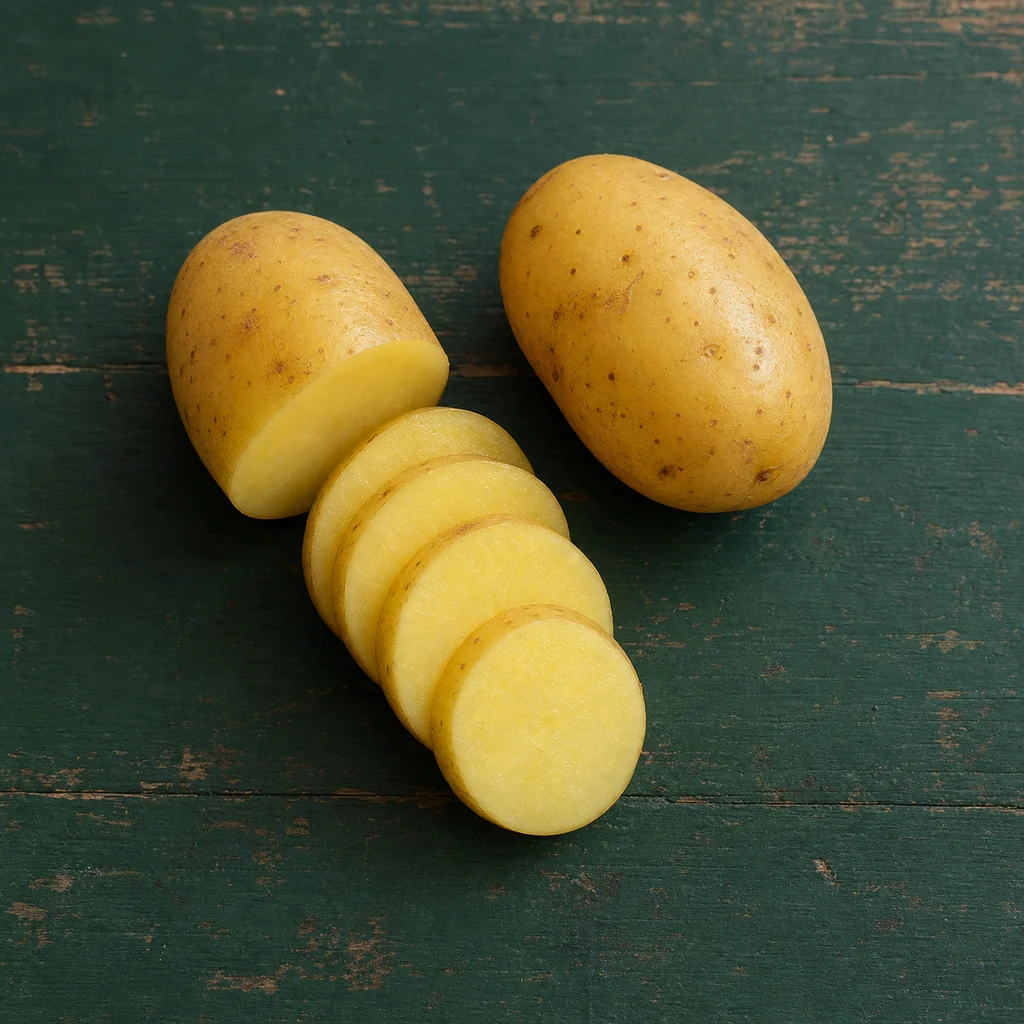
Stays in one piece
Potato salad, boiling whole, soups with distinct pieces, tidy gratin slices, rösti that should bind.
firm · waxy · salad · boiling · kogefast
A field guide for translating recipe potatoes into something you can actually buy.
A yellow-fleshed, middle-of-the-road potato: creamy enough to mash, firm enough to keep some shape. In Denmark, start with Folva — then let the dish overrule you.
Take me to the market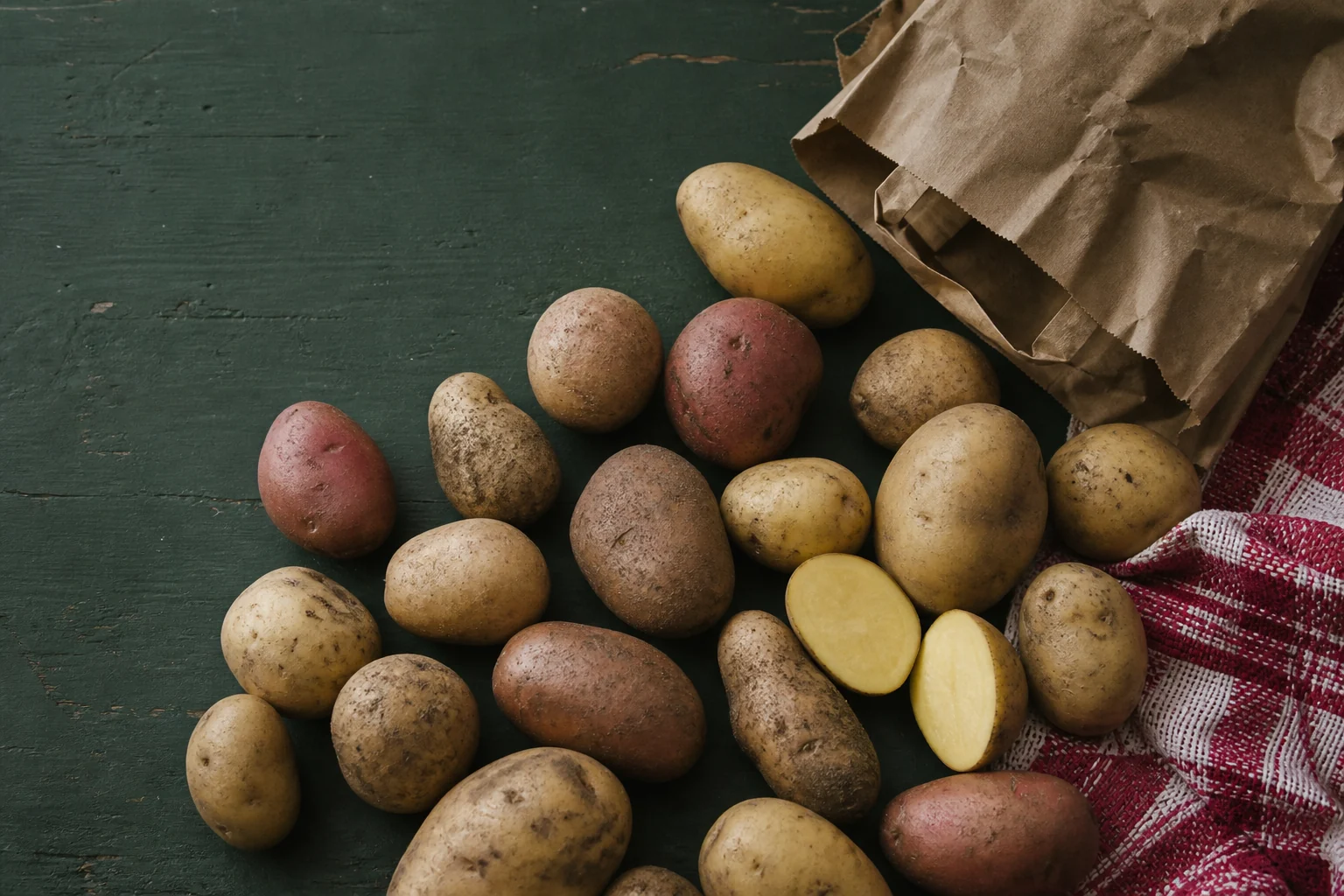
Variety names change at borders. Cooking behaviour does not. Every bag in the world sits somewhere on this one scale.
Potato salad, boiling whole, soups with distinct pieces, tidy gratin slices, rösti that should bind.
firm · waxy · salad · boiling · kogefast
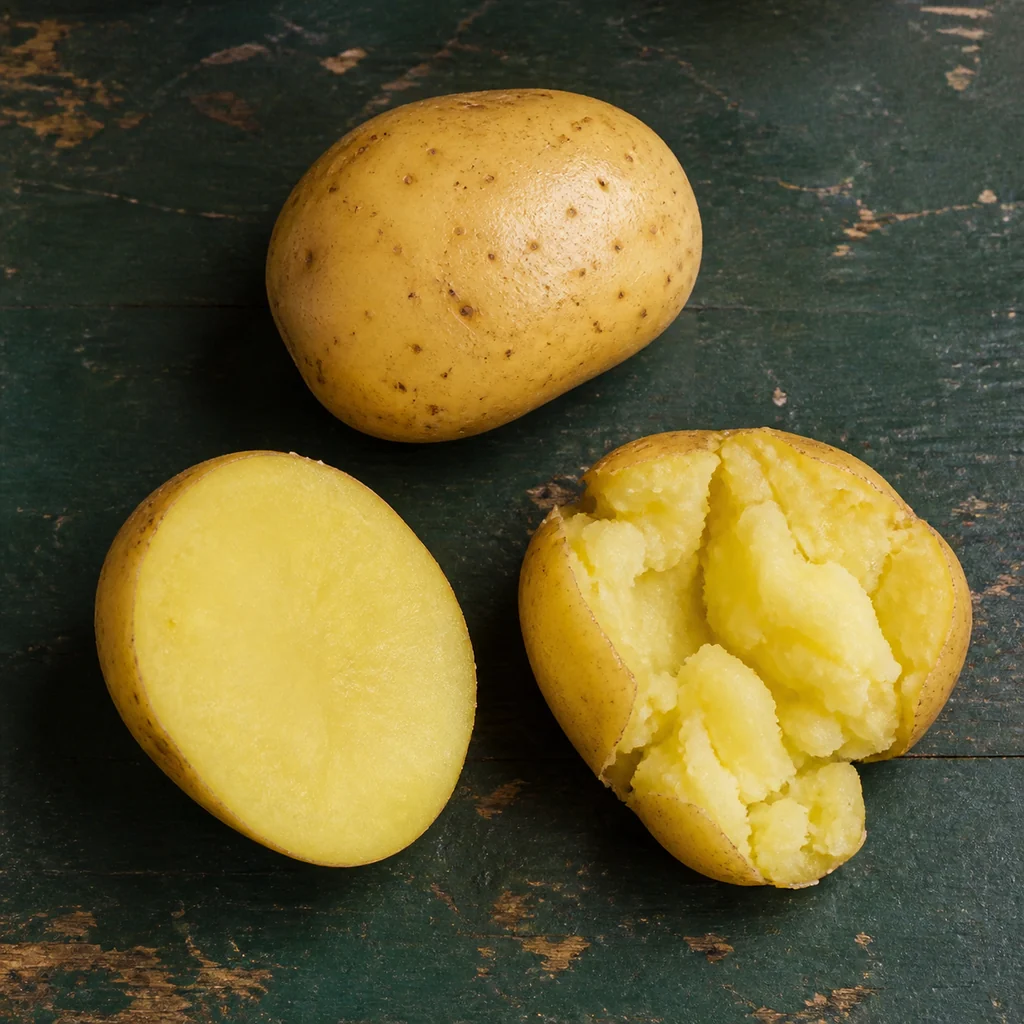
Everyday roasting, creamy mash, casseroles, soups, wedges — anything that does not need an extreme.
all-purpose · yellow · type B · slightly floury
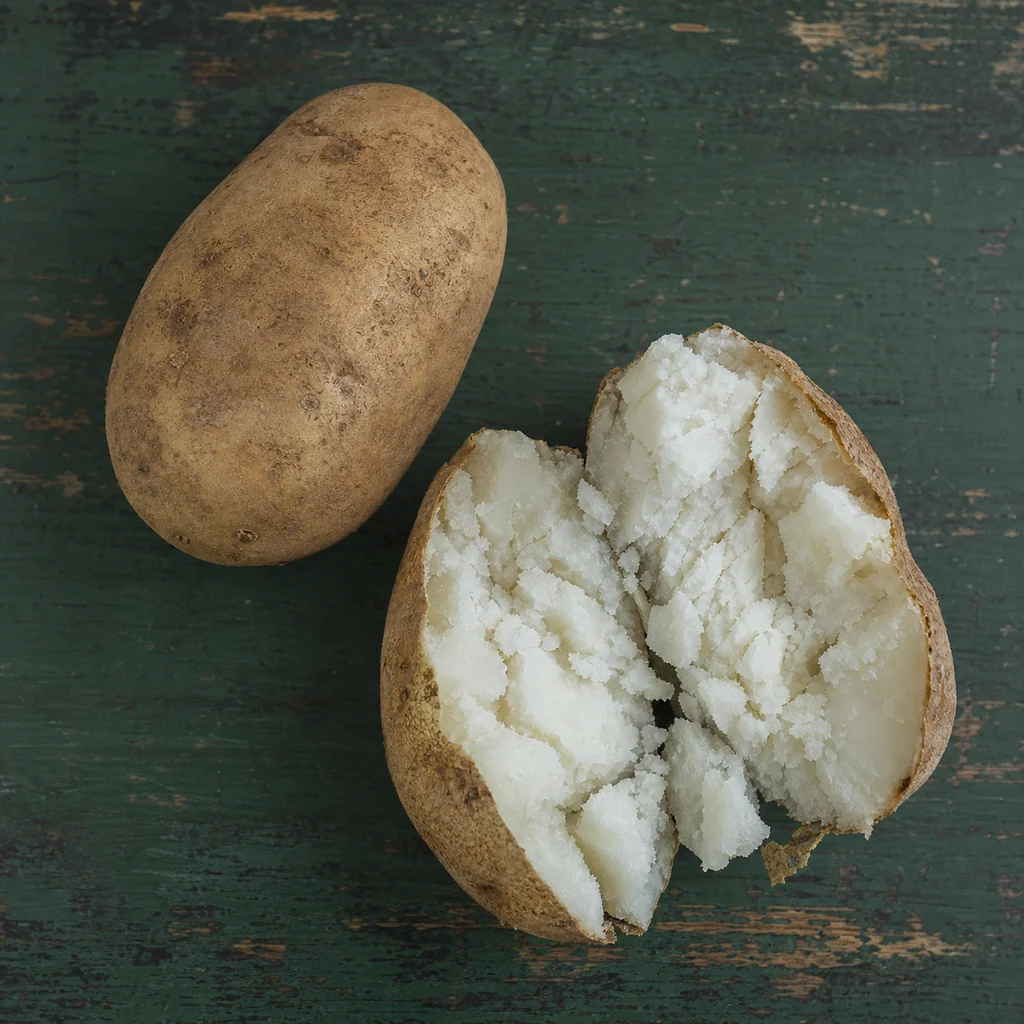
Airy mash, baked potatoes, gnocchi, croquettes, crisp roast edges, thickening a soup by accident.
floury · mealy · starchy · baking · melet
Skin colour is not evidence. Red, yellow, and brown skins each cover the whole scale. So do season, soil, and how long the sack sat in the shop.
Showing the Denmark buying guide.
The safest Danish one-bag substitute: it is sold for boiling, mash, baking, and wedges all at once. Maya is the other broad option; Melody leans usefully toward mash and baking.
Danish reality: use labels and stocked varieties rotate. If the bag lists both boiling and mash, you are in Yukon Gold territory.
These cover the firmer side of Yukon Gold. For mash or a fluffy roast, move to mjölig potatis; King Edward is the familiar floury example.
Swedish bags are unusually honest about texture. Trust the word before the variety name.
Both sit on the shape-holding side and cover most everyday dishes. Choose Pimpernel when the recipe is heading toward mash, soup, or a softer roast.
Mandelpotet is a treat, not a substitute. Do not mash it out of existence.
The yellow-coded general-purpose category is simply the Yukon Gold zone, printed on the bag. Matilda, Asterix, and Van Gogh are examples.
A three-colour code beats a hundred variety names. Every country should copy this.
This “mainly firm-cooking” middle category is the clearest functional translation of Yukon Gold.
The word is longer than the potato. Read the last third of it.
These labels sit between intact and crumbly. They work like an all-purpose yellow potato in most recipes.
Dutch shelves grade by behaviour, not romance. Nobody is selling you a story.
French bags often sell the use more clearly than the starch level. A multi-use yellow variety such as Monalisa or Bintje is a practical starting point.
The bag names the dish, not the type. If it says purée, believe it.
Yukon Gold itself may be sold. Otherwise choose an all-rounder such as Desiree. Maris Piper is flourier: excellent for mash, chips, and roasties, less faithful for salad.
“Baking potato” on a British shelf is a texture claim, not advice about the oven.
Rooster is the readily understood Irish all-rounder and has yellow, floury flesh. It is a little fluffier than Yukon Gold, so use a waxier potato when slices must stay exact.
Ireland has opinions about potatoes. Rooster is the one nobody argues with.
Monalisa is a useful yellow, semi-waxy all-rounder. Choose Agria when the Yukon Gold recipe is really about frying or crisp roast edges.
If the bag says para freír, it has already decided what you are cooking.
Yellow-fleshed multi-use potatoes are the practical match. For gnocchi or very airy mash, ignore the colour shortcut and choose a bag marked floury.
Gnocchi is the one dish where yellow flesh will not save you. Buy farinose.
The letter is more dependable than a translated variety name. Type B is general-purpose: firm after cooking but easy to crush with a fork.
One letter, no marketing. Central Europe solved this and told nobody.
Yukon Gold is the named variety. Supermarket “yellow potatoes” are often sold as the same practical category, though the exact cultivar may differ.
You already have it. The rest of the world had to write a guide about you.
Follow the end-use label first. In New Zealand, Rua, Moonlight, Vivaldi Gold, Frisia, Ilam Hardy, Maris Anchor, and Desiree are listed as all-purpose examples.
The label tells you the dish. Read it before you read the variety name.
If that does not translate, name the dish: “one that roasts but does not completely fall apart,” or “one that makes creamy, not fluffy, mash.”
Nobody has ever been thrown out of a market for asking which potato falls apart.
Denmark: Sava, Ditta, Santera. Elsewhere: type A / firm / waxy.
Denmark: Folva or Maya. Elsewhere: type B / all-purpose.
Folva, Melody, Maya. Go floury only if drier and lighter is welcome.
The technique wants low moisture far more than yellow colour.
More starch, crisper edges. A frying label beats a perfect name match.
Firm, or the firmer half of all-purpose, so the shape survives the tongs.
In Denmark, begin with Folva. Elsewhere, choose type B, all-purpose, slightly floury, or the middle label used locally.
Buy a baking or mashing potato: type C, mehligkochend, mjölig, jauhoinen, or the local equivalent.
Buy salad or boiling potatoes: type A, festkochend, fast, or Sava/Ditta in Denmark.
Look for small waxy salad potatoes, ratte/aspargeskartofler, or another long firm variety. “New potatoes” are a seasonal fallback, not the same cultivar.
Yukon Gold, Folva, and every named alternative are distinct cultivars. The recommendations match cooking behaviour and common retail language. Harvest timing, soil, weather, and storage can change the texture of the same variety, so the dish and the bag’s use label outrank the name.
Research checked 2 August 2026. Retail stock and package wording vary by shop and season.